Most people look at their loan EMI as a fixed number, something set the day they signed, unchangeable until the last installment. It sits on autopilot for years.
It doesn't have to stay fixed. A modest amount added on top of the regular EMI each month changes the loan in two ways at once, it shortens how long you're paying, and it shrinks the total interest that ends up leaving your account. Neither effect is small.
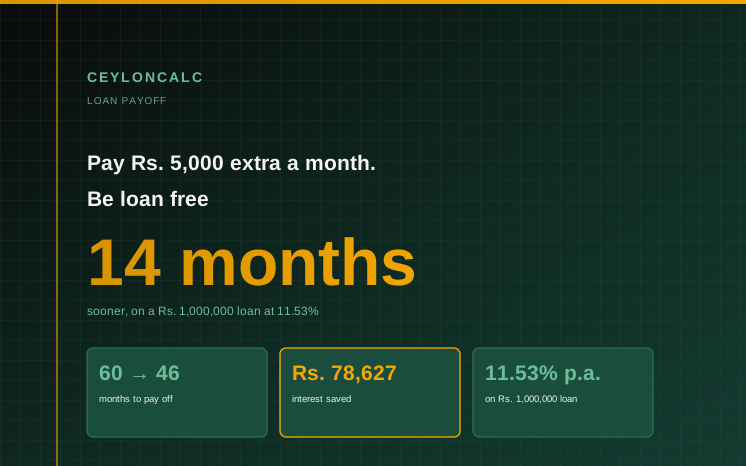
Take a Rs. 1,000,000 loan over 5 years at 11.53% per annum, the April 2026 average rate on new rupee loans reported by the Central Bank of Sri Lanka. That figure sits on top of the Central Bank's Overnight Policy Rate, which was raised to 8.75% in May 2026, the floor that commercial lending rates are built above. The standard monthly installment on that loan is Rs. 22,008, and paid exactly as scheduled with no extra payments, the loan takes the full 60 months and costs Rs. 320,460 in interest along the way.
Here is what changes at two different extra-payment amounts, both added on top of the same Rs. 22,008 monthly installment.
Going from Rs. 5,000 to Rs. 10,000 extra does not double the savings. The second Rs. 5,000 a month saves an additional Rs. 47,030 and cuts 8 more months off the timeline, meaningful, but less than the first Rs. 5,000 extra achieved. Extra payments deliver diminishing returns as the loan progresses, which is exactly why extra payments made earlier in the term save more than the same amount paid later.
Loan interest is calculated each month on whatever principal is still outstanding. In the first few years of a 5-year loan, that outstanding balance is close to the full Rs. 1,000,000, so a large share of every regular EMI payment goes toward interest rather than principal. An extra payment made during these early years reduces the balance that all future interest gets calculated on, which is why extra payments made sooner save more than the same amount paid later in the loan's life.
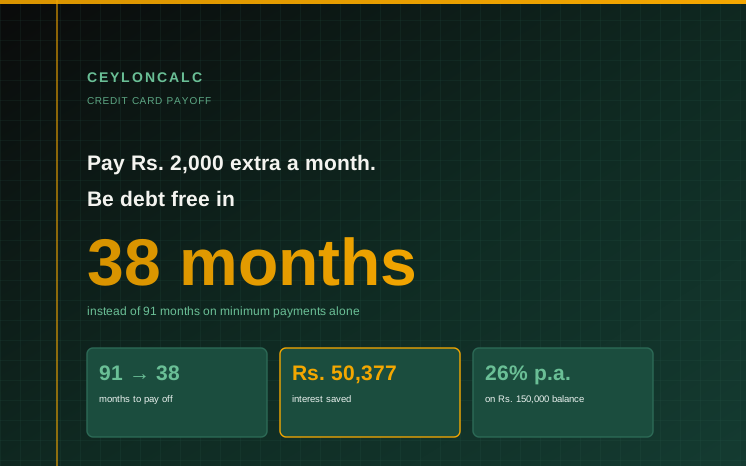
This is the same underlying mechanism that makes minimum credit card payments expensive and extra payments powerful, just applied to a structured, fixed-term loan instead of a revolving balance.