A loan offer at 11.53% and another at 12.53% look like they're in the same ballpark. One number, one decimal point apart, easy to shrug off in favor of whichever lender is more convenient.
They aren't in the same ballpark once the loan actually runs its course. A single percentage point, compounded over years and applied to a large principal, adds up to a specific, calculable amount of money, not a rounding error.
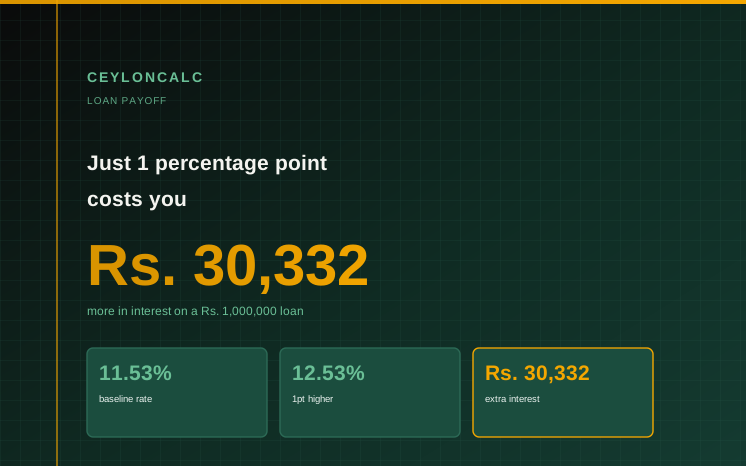
Take a Rs. 1,000,000 loan over 5 years, the same anchor used in our extra loan payments guide. At 11.53%, the current average rate on new rupee loans, total interest over the life of the loan comes to Rs. 320,460. Move that same loan to 12.53%, one point higher, and total interest rises to Rs. 350,792.
Here's the same Rs. 1,000,000, 5-year loan at three rates, one point apart in each direction.
The monthly EMI barely moves, roughly Rs. 500 a month between each step. That's exactly what makes a rate difference easy to dismiss when you're comparing loan offers side by side, the monthly number looks almost identical. The total interest tells a different story, nearly Rs. 30,000 apart at each one-point step, because that small monthly gap compounds over 60 payments.
The EMI is calculated to amortize the loan evenly over its term, so a higher rate mostly shows up as a slightly larger monthly payment rather than a dramatically different one. But interest is calculated every month on the outstanding balance, and a higher rate means more interest is charged on that balance every single month for the full 60-month term. Multiply a small monthly difference by 60 payments and the gap becomes substantial, even though no single month looks alarming on its own.
This is also why comparing loan offers by monthly payment alone can be misleading. Two offers with EMIs that differ by only a few hundred rupees can still differ by tens of thousands of rupees in total cost over the full term.